
Air Compressor Controls Optimization
Manufacturing Facility · Nova Scotia · 24/7 Operations
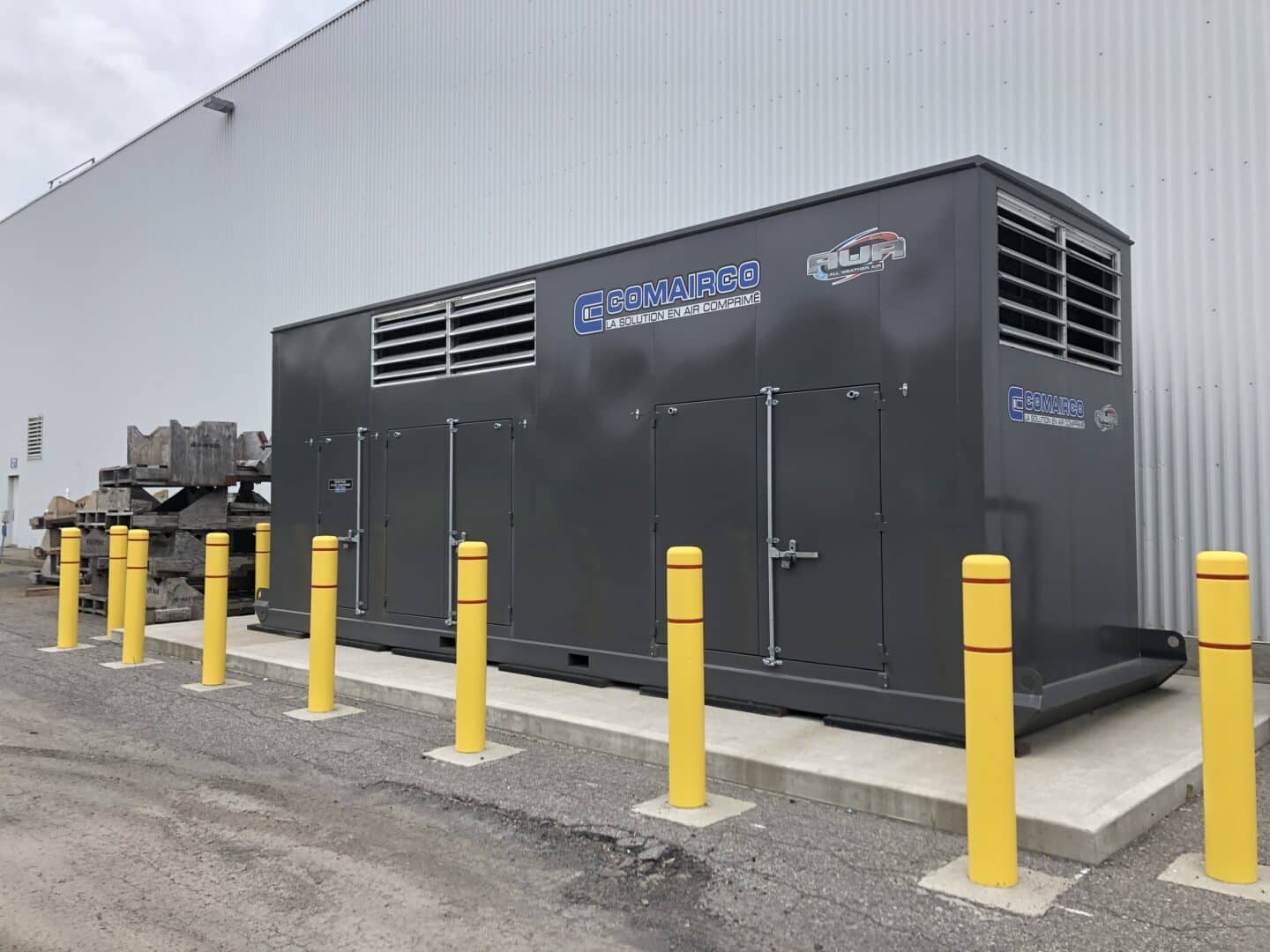
This Nova Scotia manufacturing facility runs 24/7 production supplied by a single 350 HP modulating rotary screw air compressor, with two smaller trim units on standby. A Panevo audit using metered compressed air data from the site's ioTORQ EMIS platform showed that the modulating unit was oversized and performed poorly most of the time, consuming more electricity than necessary. Panevo identified an opportunity to cut power consumption by shifting duty to the backup compressors during those periods, but the site needed to trial the change under live conditions before adopting it permanently. That same meter data justifies a further capital project to replace one or both compressors, projected to deliver a further 10% in energy savings on top of the results below.
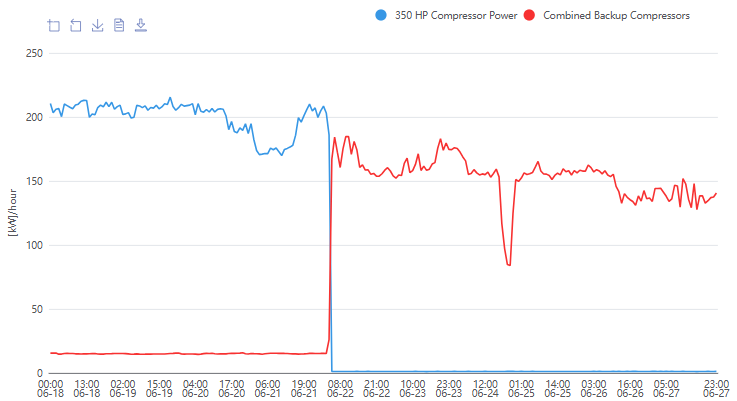
The blue line shows baseline input energy to the modulating compressor. Mid-chart, the unit is switched off and the backup compressors take over, shown as the red line, at roughly 28% lower power for equivalent production rates, while compressed air demand continues to be fully met.
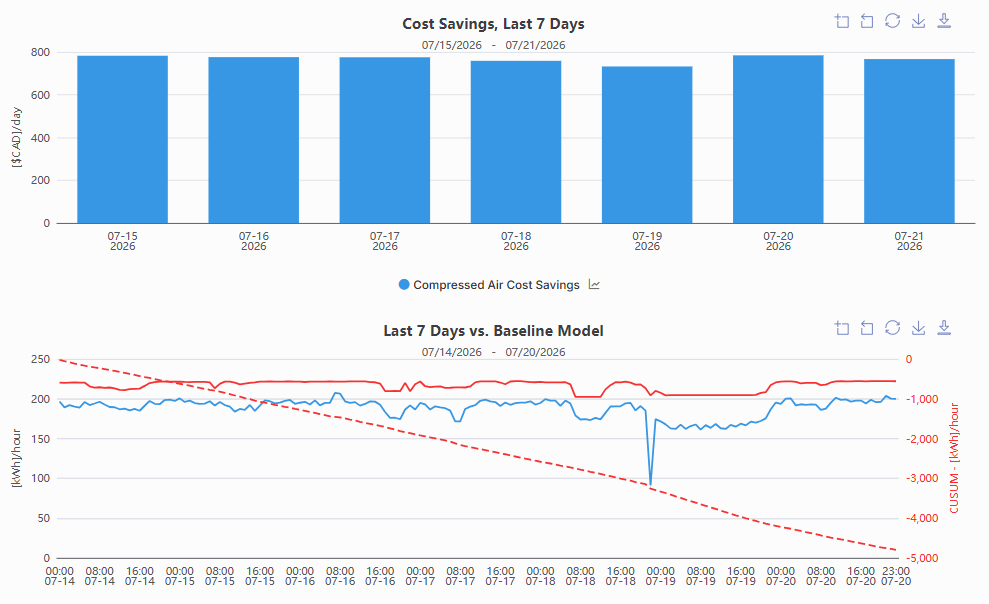
Cost Savings Tracking: Live metering data feeds a dashboard summarizing real-time compressed air cost savings, summed daily here. The below chart shows ongoing performance, with current operation (blue) outperforming the prior baseline (red) during all observed hours.
Metered diagnosis, not guesswork: Panevo used existing ioTORQ EMIS power and flow trends to show the main modulating compressor performed well at high loads but poorly at low loads, rather than relying on nameplate assumptions.
No-capex right-sizing: Recommended running the existing smaller backup compressors as the lead units during low-load periods instead of the main modulating compressor, requiring no new equipment purchase.
Site-validated trial: The site trialed the change under live production conditions, confirming the backup compressors could fully meet demand with markedly better results than expected before the change was adopted permanently.
Ongoing verification: Continued monitoring through the ioTORQ dashboard confirms the power reduction is sustained and air delivery remains uninterrupted.
Next-phase capital project: Using the metered data from this project, Panevo identified a further capital project, replacing the compressors, projected to add approximately 48,300 kWh/yr (~$7.2K) in additional annual savings on top of the results above.
24/7 live production: The compressor switch-over was executed without stopping the production line, using live ioTORQ data to time and validate the transition in real time.
Risk of undersupply: Backup compressors are typically sized for redundancy, not primary duty. Panevo validated with metered data that supply would remain adequate before recommending the permanent operational change.
Shifting demand baseline: The site had recently installed new equipment that significantly changed its compressed air demand. Panevo timed implementation to match the site's true, current demand rather than the demand levels recorded when the assessment began.
Unique configuration constraints: The existing modulating compressor was controlled by a legacy combination of remote variable speed drive and modulation - initial review seemed to show that the compressor had a VFD, however a deeper analysis revealed the true operation of this component and the potential savings opportunity.